ServicesSiding
Siding Repair and Replacement in Ludlow
Loose panels, soft boards and gaps around windows let water into your walls. We find where it's getting in, fix the wall behind the siding when it needs it and finish the job clean. The person who writes your estimate stays your contact until the yard is swept.
What Siding Work Covers
Siding is the skin on your walls. Its job is to shed rain and keep the wrap and sheathing behind it dry. When a panel cracks or a seam opens, the siding usually looks fine for a while. The damage happens out of sight, in the wood behind it.
Sometimes a repair is all you need. A few torn vinyl panels or one rotted run of clapboard can be swapped out and matched. Other times the whole wall is tired, the old wrap is gone and patching only moves the problem. We tell you which one you're looking at and why, and we show you photos so you can see it too.
You'll deal with one person the whole way. That person walks the house with you, writes up the estimate, sets the schedule and checks the work when it's done. If something changes once the old siding comes off, you hear it from the same voice.
What's Included in Our Siding Work
- Panel and board repair
- We replace cracked, warped or blown-off vinyl panels and rotted wood or fiber cement boards. We work to match profile and color as closely as we can and tell you up front if an exact match isn't possible.
- Full wall or whole-house replacement
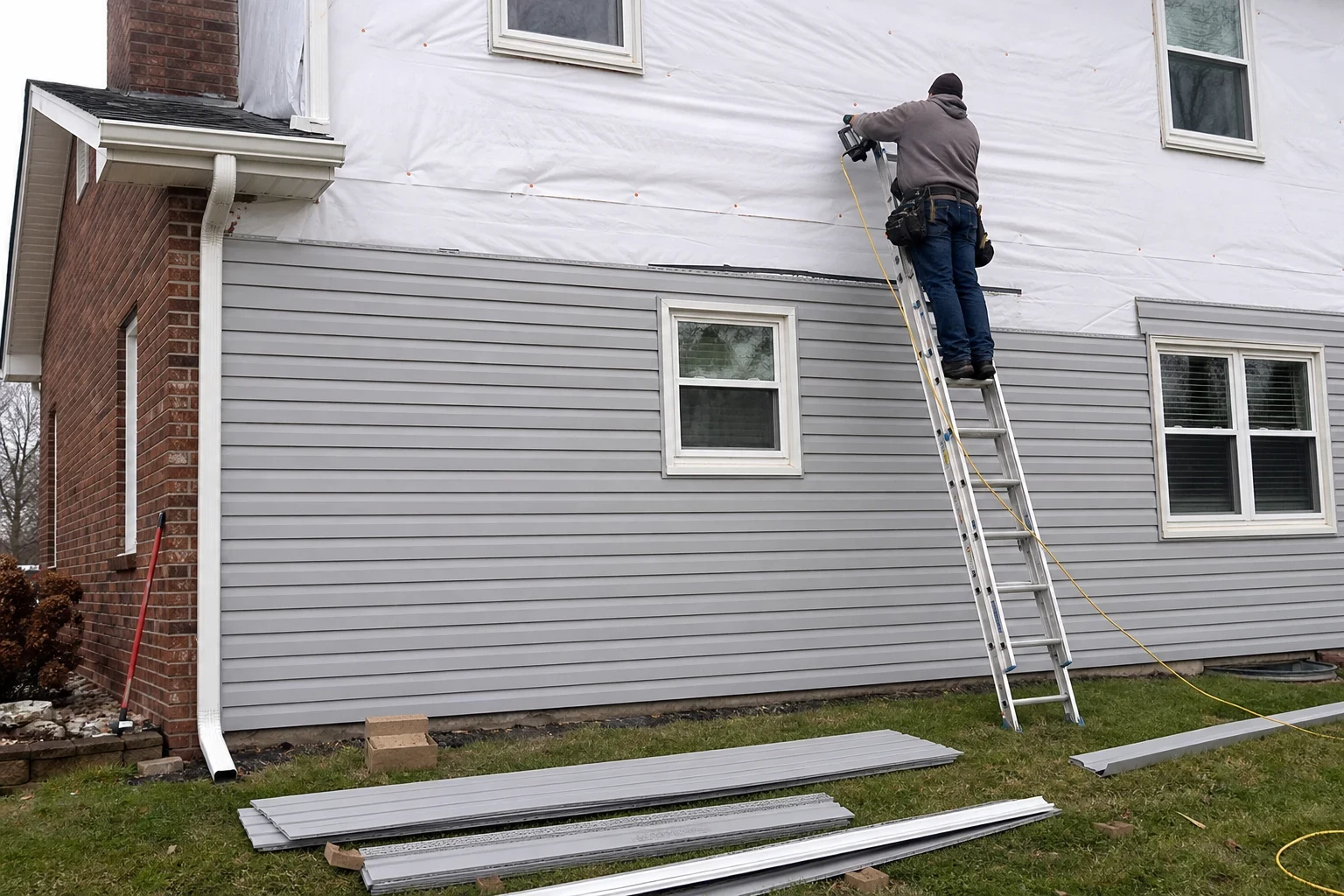
- When repairs won't hold, we strip the old siding down to the sheathing. Then we install new siding with fresh trim and accessories.
- Sheathing and wrap check
- With the siding off, we look at the wood underneath. Soft or stained sheathing gets replaced before anything goes back over it. New house wrap is lapped so water runs down and out, not in.
- Flashing at windows, doors and the roofline
- Most wall leaks start at an opening or where a roof meets a wall. We flash around windows and doors and add kickout flashing where a lower roof runs into siding, so rain off the shingles doesn't run behind the wall.
- Cleanup each day
- Old panels, nails and scraps go in the dumpster, not your flower beds. We run a magnet over the yard and driveway before we leave.
Signs Your Siding Needs Work
Panels that rattle or hang loose
Wind gets under a loose panel and works it free. One loose piece today is often three missing ones after the next storm.
Soft spots or swelling
Press on the lower boards near the ground and under windows. If wood gives or fiber cement has puffed up at the edges, water has been sitting in it.
Stains or peeling paint inside
Water marks on an inside wall, or paint bubbling near a window, can mean water is getting behind the siding outside.
Warping, cracks or buckling
Vinyl nailed too tight can't move with the seasons, so it buckles in summer and cracks in a hard freeze. Our winters swing above and below freezing often, and that movement finds every weak spot.
Mold or moss along the bottom courses
Green streaks low on a shaded wall mean the siding stays wet too long. Check what's draining onto it, like a full gutter.
What Sets the Price of Siding Work
Every house is different, so we price from what we see on your walls. A small repair and a full re-side are very different jobs. Your written estimate shows where each part of the cost comes from.
Wall area and height
More square footage means more material and labor. Tall gables and third-floor walls need more staging and take longer.
Material you choose
Vinyl, fiber cement and wood each cost different amounts to buy and install. We'll lay out how each one holds up and what upkeep it needs.
What's under the old siding
Sound sheathing goes fast. Rotted boards or several old layers to strip off add time and material. Many older homes here have original wood under newer siding.
Windows, doors and trim
Each opening needs flashing and trim work. A wall with lots of windows costs more than a plain one of the same size.
How a Siding Job Runs
- 1
Walk the walls with you
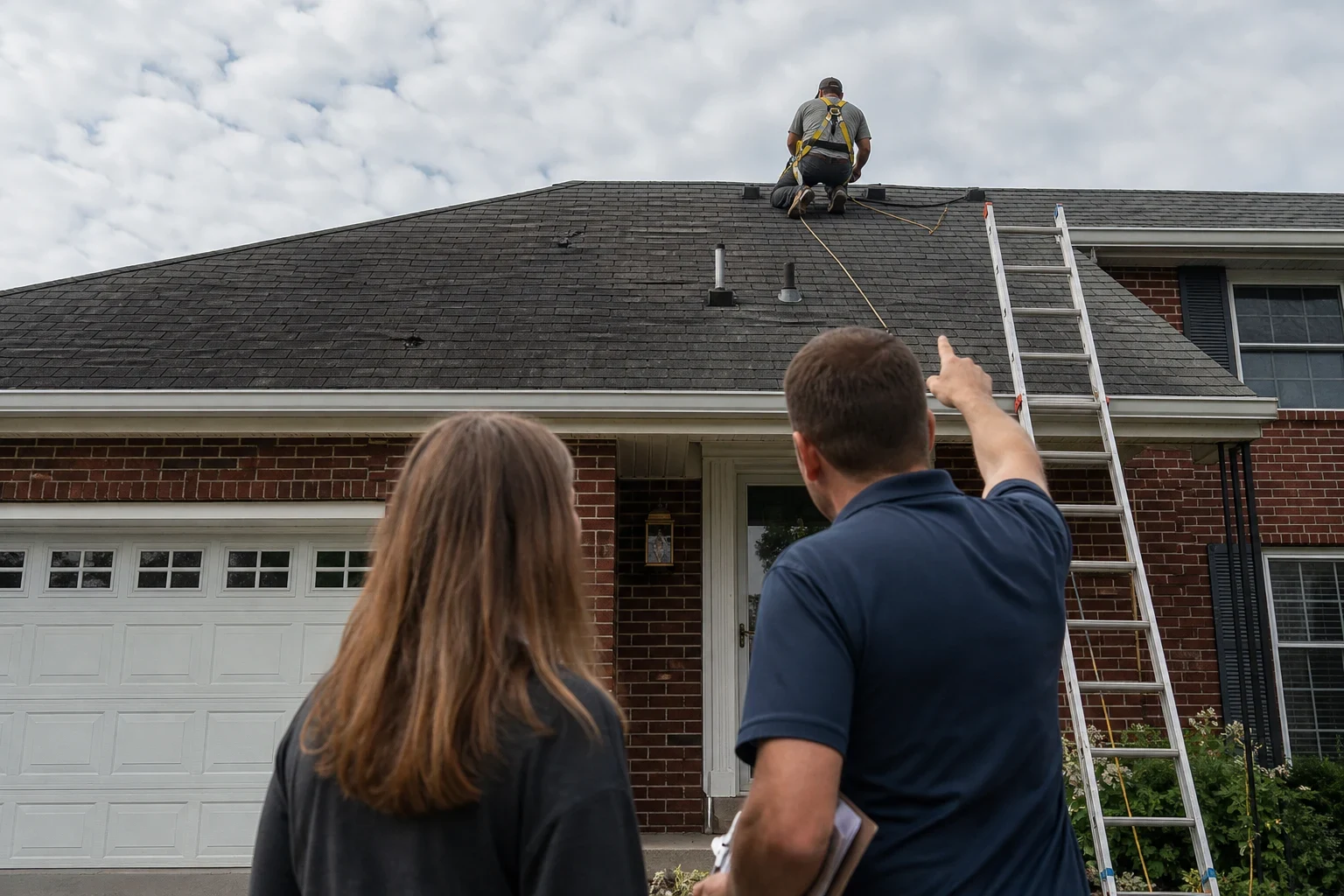
We look at every side of the house, press on suspect boards and check the trim, windows and roofline. You get photos of what we find and a plain answer on repair or replacement.
- 2
Written estimate, line by line
You get a written estimate that lists the siding, trim, wrap, flashing and labor. We also explain how we'll handle any rotted sheathing if we find it, so you know before we start.
- 3
Tear-off and repair underneath
We remove the old siding one wall at a time so your house isn't left open. Bad sheathing is replaced and new wrap and flashing go on the same day.
- 4
Install and trim out
New siding goes up with room to expand and contract, nailed the way the maker calls for. Corners, J-channel and trim are fitted tight around every opening.
- 5
Final walk-through
Your contact walks the house with you, points out the details and answers anything left. The yard is cleaned before we call it done.
Siding Questions We Hear
Can you match my existing siding for a repair?
Often, yes. We take a piece to compare profile, size and color. Older vinyl fades, so a new panel can look a shade off at first. If a close match isn't possible, we'll talk through options like moving original panels to the front and putting new ones on a side wall.
Can new siding go over the old siding?
We don't like to. Covering old siding hides rot and traps moisture, and you lose the chance to replace the wrap and flashing. Taking it off lets us fix what's underneath.
Will someone have to stay at the house during the work?
No, most people go about their day as usual. We ask that the yard be clear along the walls and that we can reach an outside outlet. Your contact tells you each day's plan ahead of time and phones you if we find something that needs your decision.
Why does a roofing company do siding?
Walls and roof work together to keep water out. Where they meet, the flashing has to be right on both sides. If your roof needs attention too, a roof inspection on the same visit lets us look at the whole picture.
How many days will my siding work take?
Swapping out a handful of damaged panels usually wraps up in one visit. Re-siding the whole house takes more than one visit. The count comes down to wall area, how high the walls go and how much rotted sheathing turns up once the old siding is off. We put an honest schedule in your written estimate, and your contact lets you know right away if weather or hidden rot moves it.
Have Your Siding Looked At
We'll check your walls, show you photos and give you a straight answer on repair or replacement. One person will be your contact from start to finish.