ServicesRoof Replacement
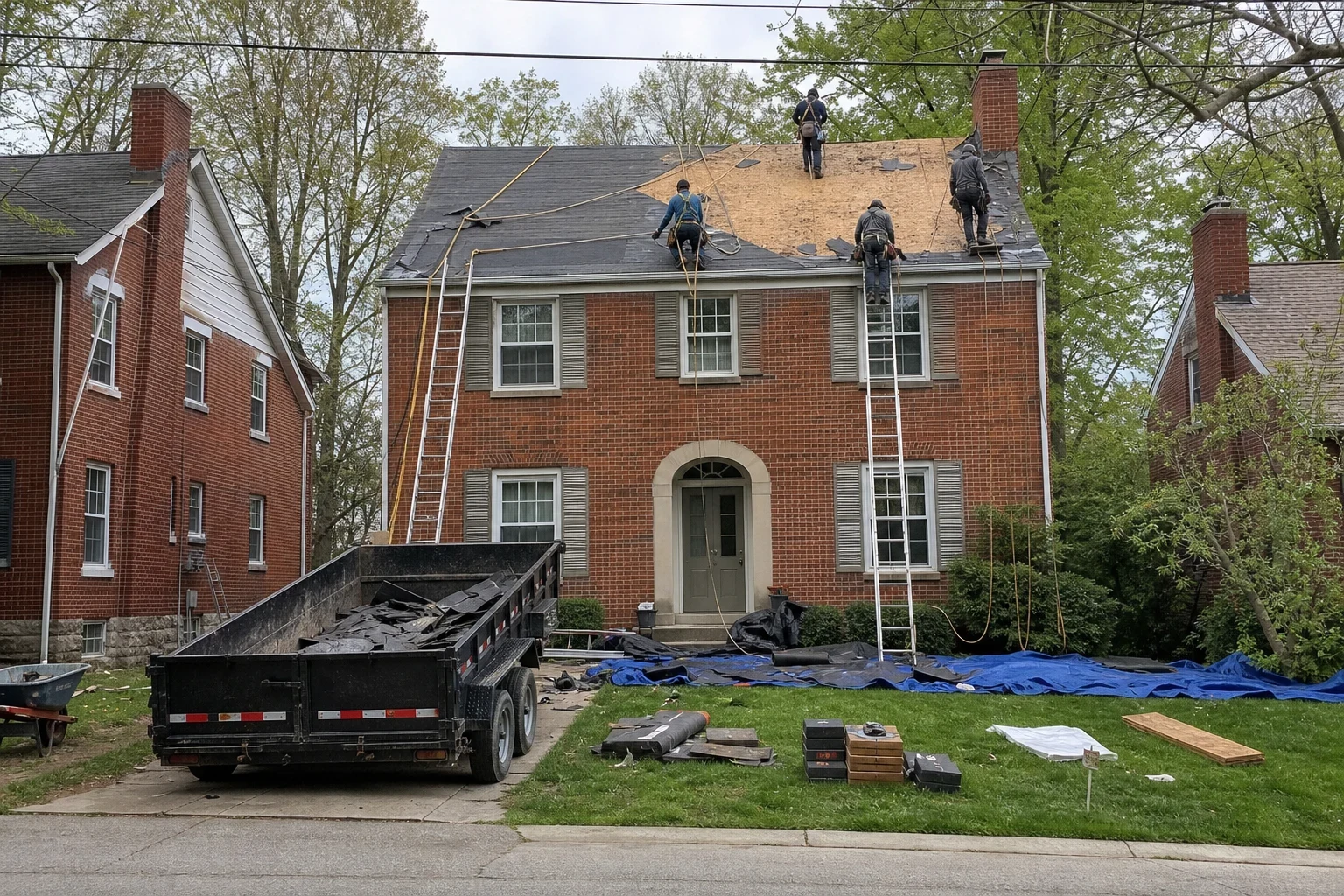
Roof Replacement in Ludlow, From Tear-Off to Final Sweep
When patches stop holding, a new roof is the fix that lasts. We strip the old layers, check the wood underneath and build a new roof from the deck up. One person answers your questions and keeps the schedule from the first estimate to the last nail pickup.
When a New Roof Makes More Sense Than Another Repair
Age alone does not mean a roof has to come off. When most of the shingles still lie flat and the problem sits in one area, roof repair costs less, and we will say that plainly. A new roof earns its price when wear shows on every slope, when leaks keep moving to new rooms, or when the boards below the shingles have gone soft.
Our winters here bring freeze and thaw, ice at the eaves and wet snow that sits for days. A tired roof lets that water work its way in. A new roof, built right, sheds it.
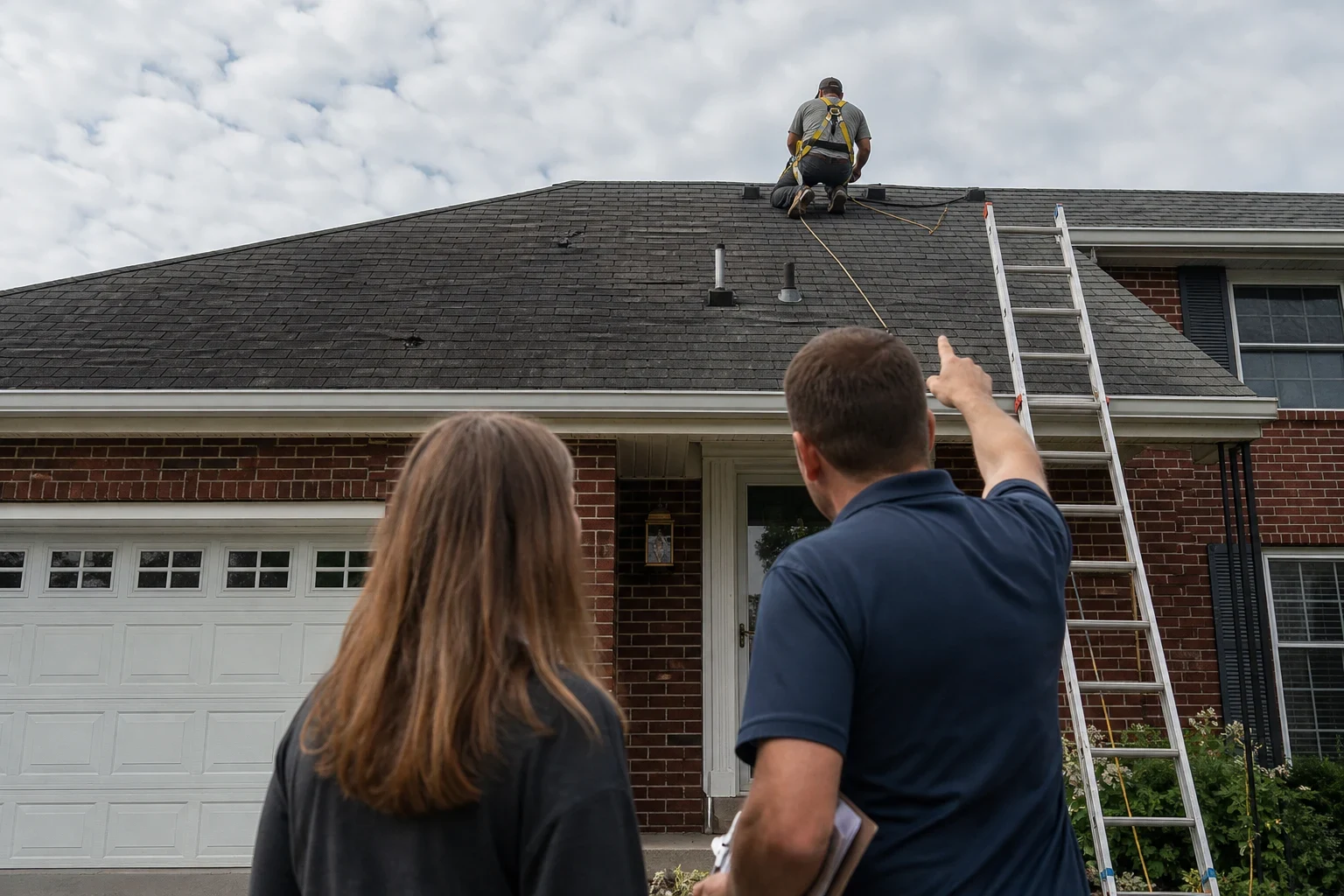
On a job like this you deal with one person. That person walks your roof, writes the estimate, orders the material, sets the dates, talks to you during the work and does the final walk with you. You never have to wonder who to ask.
What Comes With a New Roof From Us
Old layers off, down to the wood
Every old shingle and layer of felt comes off until bare boards show. Nobody can judge the decking until it is out in the open.
Decking check and repair
We walk the bare deck and mark any soft, rotted or delaminated boards. You see photos before anything gets replaced, so nothing on the bill is a surprise.
Ice and water shield plus underlayment
Self-sealing membrane goes along the eaves and in the valleys, where ice dams and heavy runoff do the most damage. The rest of the deck gets synthetic underlayment before a single shingle goes on.
New flashing and pipe boots
Chimneys, walls, skylights and vent pipes get new flashing and boots. Reusing old, bent metal is where a lot of new roofs start leaking.
Attic ventilation
We check intake at the eaves and exhaust at the ridge. A roof that can breathe holds up longer and cuts down on winter ice dams.
Cleanup every day
Tarps protect your plants and siding. A magnet goes over the yard and driveway at the end of each day, not just the last one.
Signs Your Roof Is Due for Replacement
- Grit collecting in the gutters
- The sandy granules on a shingle wear off over the years. When you find a layer of them in the gutters or washed out at the downspouts, the asphalt is exposed to sun and breaking down.
- Curling or cupped shingles
- Edges that lift or centers that dip let wind get under them. Once that happens across the roof, sealing them one by one stops being worth it.
- Leaks in more than one spot
- One leak is a repair. Stains showing up in different rooms, season after season, usually point to a roof that is failing everywhere.
- A soft or sagging roofline
- A dip between rafters or a spongy feel underfoot means the decking has taken on water. That wood has to come out, and the shingles over it go too.
- Light or damp in the attic
- If you can see daylight through the boards or find wet insulation after a rain, water is getting past every layer. Our roof inspections can confirm it either way.
How Your Roof Replacement Runs
- 1
Estimate on the roof and in the attic
We look at the shingles, flashing, vents and the underside of the deck. You get a written, line-item estimate and a straight answer on whether repair would do instead.
- 2
Material, permit and dates
Once you pick your shingle and color, we order it, pull the permit where one is required and give you a start date. The same person you met at the estimate calls you if the weather moves it.
- 3
Tear-off and dry-in
We only strip what we can cover the same day. By evening the deck is under membrane and underlayment, so a surprise shower does not reach your home.
- 4
Shingles, flashing and vents
Each shingle is fastened where the maker's instructions call for, with the number of nails they require. Flashing and ridge vents are set as the courses go up, so they tie into the roof instead of being added at the end.
- 5
Final walk and cleanup
We sweep the yard and driveway with a magnet, clear the gutters and walk the finished roof with you. Any question you still have goes to the same person who started the job.
What Moves the Price of a New Roof
We price a roof on what we find up there, not on a guess from the curb. Your written estimate breaks the job into lines for tear-off, decking, underlayment, shingles, flashing and cleanup. Below are the things that change the total most.
- Roof area and steepness
- A bigger roof needs more bundles and more hours. Steep slopes slow everyone down, since the crew works in harnesses and every step takes care.
- Layers to tear off
- A roof with two or three old layers takes more labor and more dumpster space to remove than a single layer.
- Condition of the decking
- Soft or rotted boards have to be replaced. We cannot see all of it until the old roof is off, so the estimate shows the per-board cost up front.
- Shingle choice
- Standard architectural shingles and heavier designer lines are priced differently. We will lay out the options side by side.
- Chimneys, skylights and valleys
- Every place the roof changes direction or meets a wall needs flashing work. A simple gable costs less to roof than one with several dormers.
Roof Replacement Questions We Hear Most
- How many days will the crew be at my house?
- For an average-size house, we are usually done in one to three days on site. The size of the roof, how steep it is and how many boards need swapping decide where in that range you land. Rain can push the start, and if it does, the person running your job calls to tell you the new date.
- Can you put new shingles over my old ones?
- We tear off to the deck. Laying over hides rotted wood, adds weight and makes the next replacement harder. It also means nobody ever looks at the boards holding your roof up.
- Do I need to be home during the work?
- No. We need access to an outdoor outlet and the driveway. Expect noise inside, and take down anything loose on walls in upper rooms, since hammering can shake things.
- What if the boards under my shingles are rotten?
- Work on that section pauses while we photograph the damage and show it to you. Your estimate already lists what each replaced board costs, so the only open number is how many. Then we swap them out and keep going.
- My roof was hit by a storm. Is that a different job?
- The roof work is the same, but the paperwork is different. Our storm damage repair page covers how we document damage and explain the insurance steps. We do not act as your adjuster, but we will tell you plainly what we see.
- Who do I talk to once the job starts?
- The same person who gave you the estimate. They handle the schedule, the crew and any changes, and they do the final walk with you.
Find Out If Your Roof Needs Replacing
We will look at the roof and the attic, tell you whether repair will hold or a new roof is the better money, and put it in writing. One person stays with your job from that first visit to the final sweep.