ServicesRoof Repair
Roof Repair in Ludlow, With One Person Seeing It Through
A leak, a few missing shingles or a lifted flashing seam usually doesn't mean you need a new roof. We find where the water gets in, show you photos and fix that spot. One person handles your questions from the first look to the last sweep of the yard.
A Repair That Fixes the Cause
A leak usually begins with one weak spot. The rubber seal around a plumbing vent dries out and splits. The metal strip where the roof meets the chimney works loose. Wind peels off a shingle and leaves bare nails open to the rain. Water can travel along the wood under your shingles for a few feet, so the wet spot inside rarely sits right below the opening. We follow it back to where it starts before we touch anything.
When you call, you talk to the person who will look at your roof, write the estimate and run the job. You don't get passed around. If something changes once we're up there, that same person calls you and explains it before any extra work happens.
Sometimes a repair isn't the smart money. If the shingles are worn out across the whole roof, we'll tell you plainly and walk you through roof replacement as an option. If a patch will hold for years, we'll say that too.
What a Roof Repair Covers
- Leak tracing
- We check the attic and the roof surface to follow the water path. We look at decking stains, nail heads and seams until we find where it enters.
- Shingle replacement
- Missing, cracked or curled shingles get pulled and replaced. We match color and style as closely as we can and seal the new tabs down.
- Flashing and pipe boots
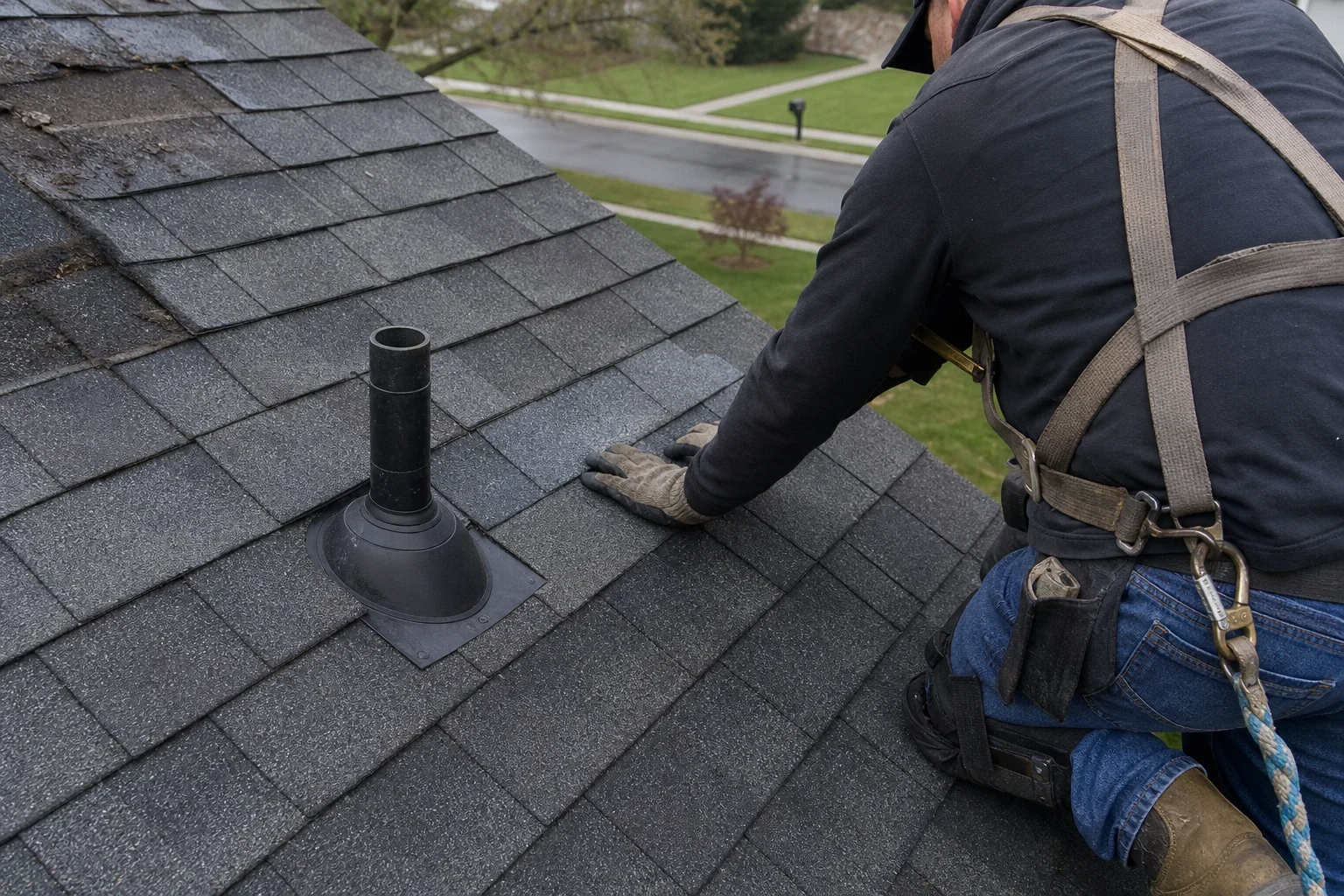
- Most leaks we see begin where something pokes through the roof or meets a wall, like a chimney, skylight or vent pipe. We reseal loose metal flashing, replace pieces that are bent or rusted, and put new rubber boots on cracked vent pipes.
- Soft decking spots
- If water has rotted the plywood under the shingles, patching over it won't last. We cut out the bad section and put down new decking first.
- Photos and cleanup
- You get pictures of what we found and what we fixed. We haul off the torn-off material and sweep the lawn and driveway with a magnetic bar to catch stray nails.
When a Roof Repair Is Worth a Call
Water marks indoors
A yellow or brown ring on the drywall, or paint that bubbles and peels, means water is getting in somewhere. A mark that has dried out can still be an active leak that only opens up in a heavy storm.
Shingles on the ground
After a windy night, look around the yard. One missing shingle leaves a spot where water can reach the nails and the wood.
Granules in the gutters
A pile of sand-like grit in your gutters or at the downspouts means shingles are wearing thin. It's worth a look before it turns into a leak.
Ice buildup at the edges
Freeze and thaw cycles in Northern Kentucky winters can push melted snow back under shingles at the eaves. Drips along exterior walls after a thaw point to this.
Damp attic or musty smell
Wet insulation, dark spots on rafters or a moldy odor in the attic often show up before any ceiling stain does.
What Moves the Price of a Repair
We price each repair after we've seen the roof, not over the phone. The written estimate lists the work line by line so you know what you're paying for. Right now we're offering Limited Time — $50 Off Your First Service Call.
Size of the damaged area
Swapping out a few shingles doesn't take long. A bigger section with several leak points needs more material and more hours.
What's under the shingles
Wet underlayment or rotted plywood has to be replaced, or the new shingles won't hold. Often that damage stays hidden until the top layer is pulled back. If we find it, we stop and call you before doing anything extra.
Roof pitch and access
A steep roof or one that's hard to reach needs more safety setup. Two-story homes and tight side yards add some time.
Flashing and penetrations
Chimney and skylight flashing takes more care than open shingle areas. Rebuilding flashing costs more than resealing it.
How a Repair Job Goes
- 1
Your call
Tell us what you're seeing and where. We set a time to come out and give you a free estimate.
- 2
Look and estimate
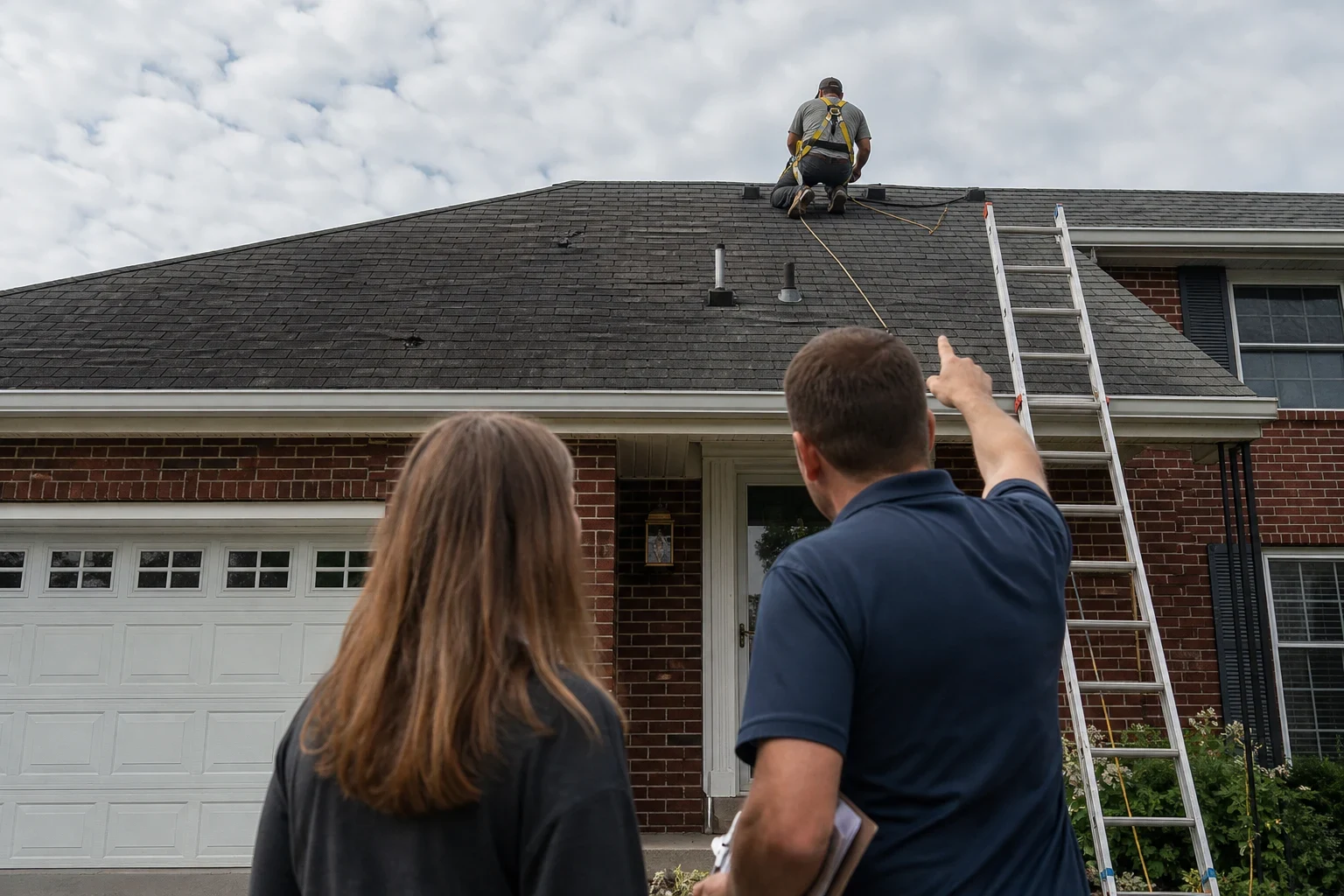
We climb up and check the shingles, flashing and vents, and we look in the attic when there's a way in. Then we show you photos, explain in plain words what failed and hand you a written price for the fix.
- 3
Repair day
A typical fix is wrapped up in part of a day. Ladders get footed and tied off, debris stays off your plants, and we let you know when work starts and when it's finished.
- 4
Walkthrough and cleanup
We show you the finished work in photos and clear the yard of nails and old material. If you have questions later, you call the same person.
Roof Repair Questions
Can you fix just one spot, or do I need a whole new roof?
Most of the time a single spot can be fixed. If the roof is near the end of its life all over, patching one area just moves the leak somewhere else. We'll show you photos and tell you which way makes sense.
Will the repair look different from the rest of my roof?
We pick the closest shingle color and style we can find. Shingles fade with sun and weather, so the new section may look a shade brighter at first. Most of the time it settles in after a season or two.
How do you find a leak that only shows up in heavy rain?
We start in the attic and look for water trails, dark wood and rusted nail tips. Then we check the roof above that area, paying close attention to flashing, vents and valleys. Most leaks leave a trail if you know where to look.
Do I need to be home during the repair?
Not always. We need access to the attic for the first look if possible. On repair day, we can work outside without you there and send you photos when we're done.
What if the damage came from a storm?
Then it may be worth looking at our storm damage repair service. We'll photograph what we find and explain what we see, so you can decide whether to talk to your insurance company.
Got a Leak or a Missing Shingle
Tell us what you're seeing. We'll come take a look, show you what failed and give you a written price, with one person handling it from there.