ServicesRoof Inspections
Roof Inspections in Ludlow, KY
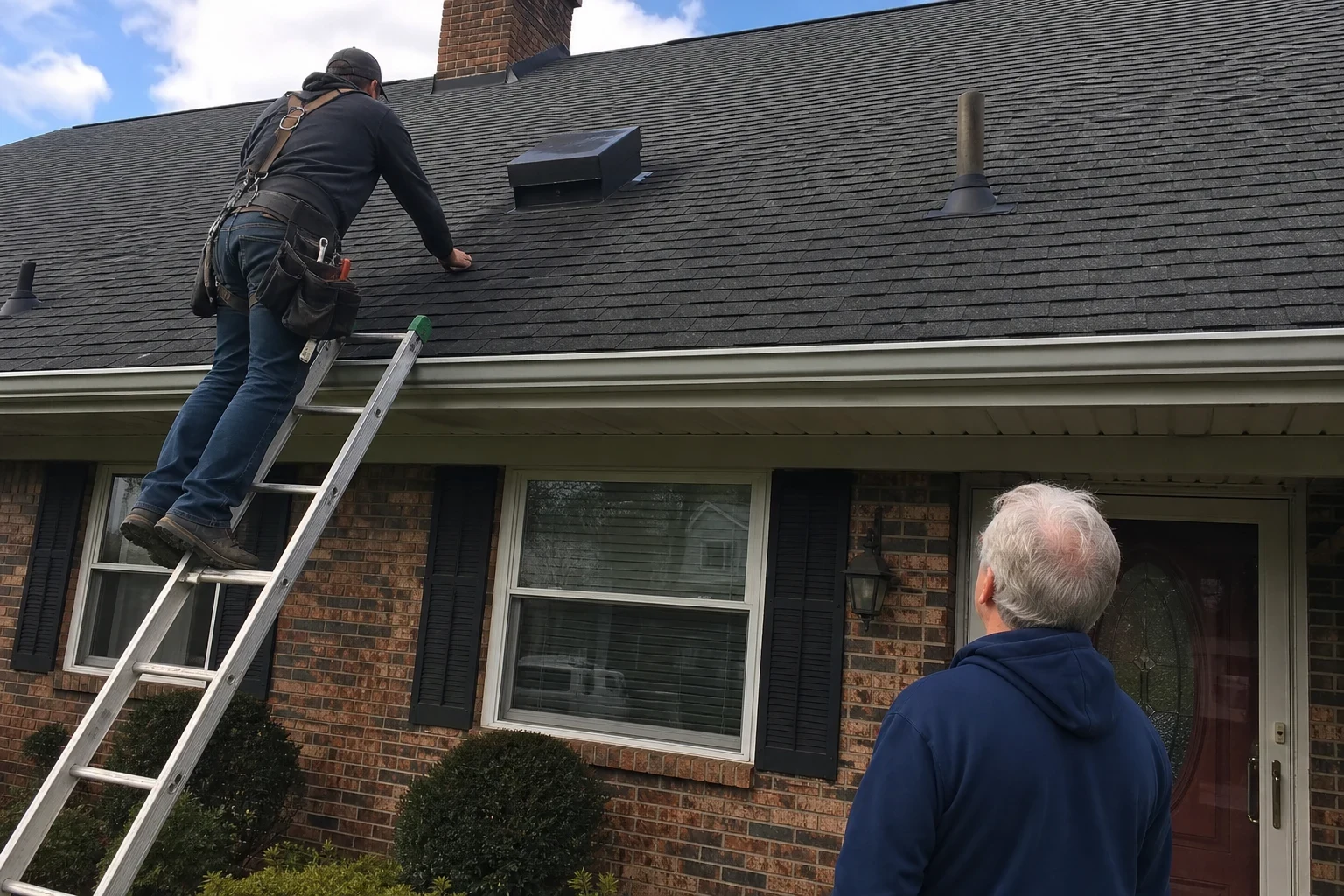
We climb onto your roof and look through the attic, checking every spot where water could get in. Pictures get taken along the way. Afterward we go over each finding with you, face to face. The person who did the inspection stays your contact from then on.
Why a roof inspection is worth an hour of your day
During an inspection we look at each part of your roof that's meant to keep water out: shingles, flashing, vents, valleys, gutters and the attic below. When it's safe, we get up and walk it rather than squinting from the driveway. You come away knowing what condition it's in and about how many good years it has left.
It makes sense ahead of a home sale or purchase, once a hard winter is behind you, or when your roof has some age on it. It's also the best first step when you can't tell whether you need roof repair or roof replacement. An inspection answers that before anyone talks price.
Here's how we keep it simple. The person who inspects your roof is the person you talk to afterward. If a question comes up a week later, you reach the same person. If work comes out of it, that person schedules it and sees it through to cleanup.
What we check on your roof
Shingles and surface
We look for cracked, curled, lifted or missing shingles, heavy granule loss and exposed nail heads. We also feel for soft spots underfoot, which usually mean wet decking below.
Flashing and openings
Most leaks start where something goes through the roof. We check chimney flashing, pipe boots, skylights and roof-to-wall joints. Rubber pipe boots crack with age, and flashing on older brick chimneys tends to pull loose as the mortar wears.
Valleys and low spots
Valleys carry the most water on any roof. We check for worn shingles, packed leaves and places where water sits instead of running off.
Attic and decking
Under the roof, we hunt for dark marks on the boards, pinholes of light, wet insulation and nails rusted at the tips. Poor airflow bakes shingles from below, so we check the vents too.
Gutters and drainage
We note sagging runs, clogs, loose hangers and downspouts that dump water against the foundation. If the fascia behind the gutters is soft, we show you. Fixes for these are covered on our Gutters page.
Photos and a plain rundown
You get photos of what we found and a clear sort of it: what needs attention now, what can wait, and what's fine. No jargon.
Signs it's time to have your roof inspected
- A stain on a ceiling
- A brown ring on an upstairs ceiling or wall means water got in somewhere. The spot inside often isn't right under the leak, so it pays to have the roof checked.
- Shingle grit in the gutters
- Granules washing out of the downspouts mean the shingles are wearing thin. Pieces of shingle in the yard are a clearer warning.
- Ice along the eaves
- Northern Kentucky winters freeze and thaw over and over. When ice builds at the edge of the roof, melting snow backs up under the shingles. If you saw ice dams last winter, have the roof looked at before the next one.
- A hard storm just passed
- Hail and high wind can lift shingles or bruise them without anything looking wrong from the ground. If we find damage, our Storm Damage Repair page explains what happens next.
- The roof is getting older
- Asphalt shingle roofs wear out over time even with no visible problems. A check now gives you time to plan instead of reacting to a leak.
- You're buying or selling
- A roof inspection tells you what you're getting into or what a buyer is likely to bring up.
How inspection day goes
- 1
The phone call
Tell us what you've noticed, if anything, and we set a time that works for you. You'll talk to the person who will be on your roof.
- 2
A walk around the house
We start on the ground. We look at the roof lines for sags, check the gutters and downspouts, and note anything along the siding near the roof.
- 3
Up on the roof
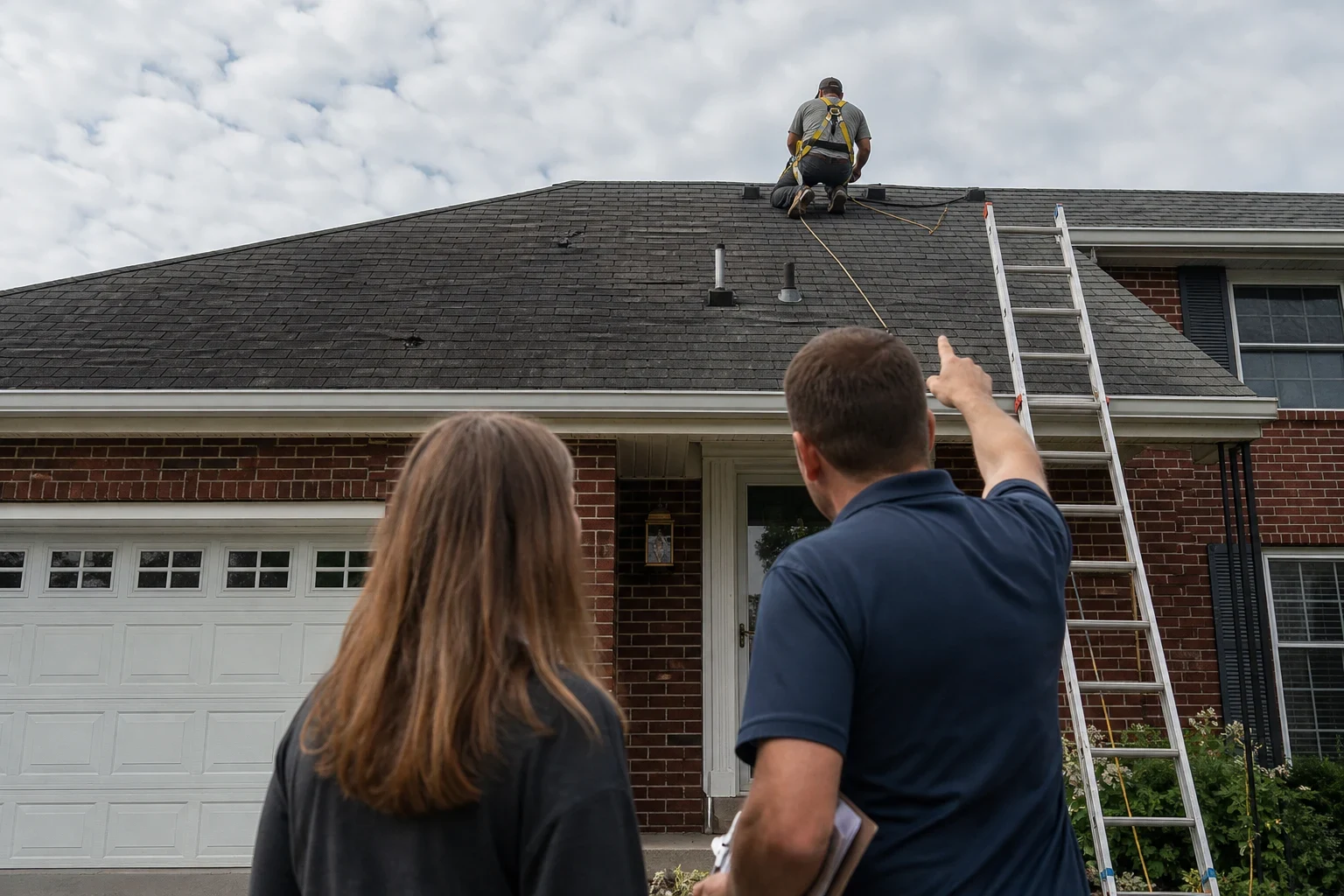
If the roof is safe to walk, we walk it and snap pictures of anything worth showing you. On very steep or fragile roofs, we work from ladders at the edges so we don't do damage just by looking.
- 4
Under the roof deck
If you're fine with it, we head up through the hatch to look at the bottom side of the boards, the insulation and the vents. Slow leaks tend to show up here before anywhere else.
- 5
Going over it with you
We show you the photos and explain each finding in plain terms. You decide what, if anything, happens next. There's no pressure to book work that day.
What moves the cost of work after an inspection
The inspection itself is free. What it turns up is what sets the price of any repair or replacement that follows. These are the things that move that number, and we point each one out on your roof so nothing shows up later as a surprise.
- How big and how steep
- A bigger roof takes more shingles and more hours. Steep pitches need extra safety gear and slow the crew down.
- What's under the shingles
- Rotten or soft decking has to be replaced before anything goes on top. We can't always see all of it until shingles come off, so we tell you up front where we suspect it.
- Chimneys and flashing
- Every chimney, skylight and wall joint adds detail work. Older chimneys often need new flashing done right, not just sealed over.
- Layers and tear-off
- If there are two layers of shingles already, both come off before a new roof goes on. That adds labor and disposal.
Roof inspection questions
- Do I pay anything for the inspection?
- No. The inspection costs you nothing, and you aren't signing up for any work by having it done. The photos and our findings are yours to keep whether you hire us or not.
- How long does an inspection take?
- Most take about an hour. A large or steep roof, or a tight attic, can take longer. We'd rather take the time than miss something.
- Do I need to be home?
- It helps. Someone needs to let us in to reach the attic hatch, and the pictures are easier to explain side by side. If you can't be there, we check the outside and call you afterward to walk through what we saw.
- Are you going to tell me I need a new roof?
- Only if it's true. Plenty of roofs just need a few things fixed, and we'll say so. If roof repair will hold, we recommend that first.
- Can an inspection help with an insurance claim?
- We photograph any damage and explain what caused it, which gives you something solid to show your insurance company. We don't act as the adjuster, and whether to file is your call. We can explain how the process usually goes.
- Do you inspect in winter?
- Yes, as long as the roof is dry and safe to be on. If there's snow or ice up there, we reschedule for a clear day.
Find out where your roof stands
One visit, a close look and photos you can keep. Whatever we find, you'll hear it straight from the person who saw it.